
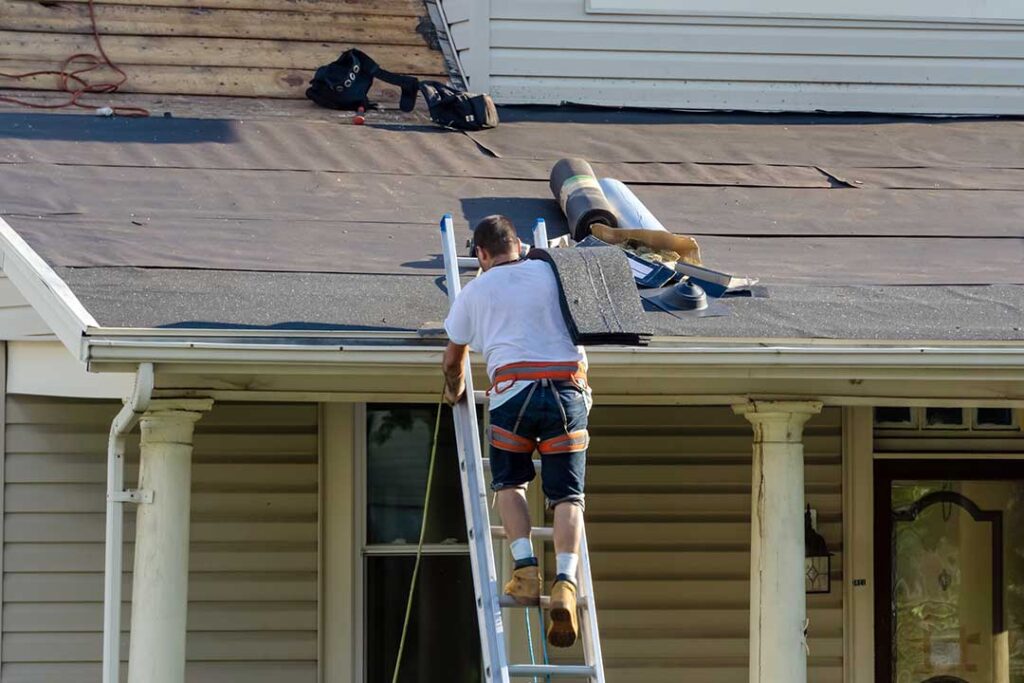
Roof repairs can sometimes be handled by a careful homeowner, but only when the task is minor, the roof is in good condition, and the work can be done without creating a fall hazard. In Olean, NY, seasonal weather adds another concern: cold temperatures, rain, snow, ice, and damp surfaces can make an otherwise simple job unsafe.
The safest approach is to judge the entire situation—not just the repair itself. A loose shingle may look easy to replace, but climbing onto a steep, wet, aging, or damaged roof can turn a small maintenance task into a serious injury risk.
Which roof tasks are usually reasonable for a homeowner?
Small, low-risk maintenance tasks are generally the most suitable for do-it-yourself work. These jobs should be performed from the ground, from a stable ladder, or from a low-slope roof with secure footing.
Examples may include:
- Clearing leaves and small branches from accessible roof areas
- Removing minor debris from valleys or around roof drains
- Replacing a damaged vent cover when access is safe
- Refastening a loose piece of exterior flashing that can be reached without standing on the roof
- Applying temporary protection over a small leak during dry weather
- Inspecting attic insulation, ventilation, and visible water staining
- Cleaning gutters from a properly positioned ladder
Even these tasks require preparation. A ladder should rest on firm, level ground, extend above the roof edge when appropriate, and be secured against slipping. A second person should be nearby when ladder work is being done.
Roof work becomes less suitable for DIY efforts when it involves steep slopes, multiple roofing layers, hidden structural damage, electrical components, or any need to remove large areas of roofing.
What weather conditions make roof work unsafe?
Weather is one of the most important factors for residents in the area. A roof that is manageable in dry summer weather can become hazardous after a night of frost or during a quick change in conditions.
Do not climb onto a roof when:
- Rain, snow, sleet, or freezing drizzle is present
- The surface has frost, ice, or visible moisture
- Wind is strong enough to affect balance or move tools
- Temperatures are low enough to make shingles brittle
- Heat has made the roof surface uncomfortable or slippery
- Thunderstorms are nearby
- Visibility is reduced by fog, heavy precipitation, or darkness
Snow and ice deserve special caution. Removing snow from a roof can place a person directly beneath falling material and can damage shingles if the wrong tool is used. Ice buildup near the eaves may also indicate ventilation or insulation problems that cannot be solved safely by simply breaking the ice away.
A dry, calm day is safer than a damp or windy one, but good weather does not eliminate fall risks.
How can someone tell whether a roof is safe to walk on?
A roof should not be treated as safe simply because it appears intact from the ground. Age, slope, surface material, and hidden deterioration all affect how well it can support a person.
Walking on a roof is especially risky when:
- Shingles are curling, cracked, loose, or missing
- The roof feels soft, spongy, or uneven
- There are visible sagging areas
- Moss or algae has created a slick surface
- Granules are missing from large areas of shingles
- The roof has a steep pitch
- Skylights, plastic panels, or translucent sections are present
- The roof edge, chimney area, or valley shows damage
- The roof has been exposed to prolonged moisture
Older roofs can have weakened decking beneath shingles. A person may step on a surface that looks solid but cannot safely support body weight. Roofs with fragile materials, including some older coverings, may break or shed pieces under pressure.
If the only safe way to inspect a problem is to walk across an uncertain surface, the inspection itself may require specialized equipment and experience.
What safety equipment is needed for minor roof work?
Basic tools are not enough. Safe roof work depends on fall protection, stable access, and a plan for handling tools and materials.
Depending on the task, equipment may include:
- A properly rated extension ladder
- Ladder stabilizers or a secure tie-off point
- Slip-resistant footwear in good condition
- Work gloves and eye protection
- A tool belt rather than loose hand tools
- A roof bracket or secure work platform where appropriate
- Fall-arrest equipment designed for roofing work
- A spotter on the ground
Fall-arrest equipment must be anchored to a suitable structural point and used according to its instructions. Attaching a harness to a weak vent, gutter, decorative trim, or improvised anchor can create a false sense of security.
Never carry heavy or awkward materials while climbing. Hoist tools after reaching a secure position, and keep the area below clear of people and pets.
Which roof problems should not be handled as a DIY repair?
Some conditions indicate a larger problem beneath the visible damage. A small ceiling stain, for example, may result from failed flashing, deteriorated decking, ice-related water backup, or moisture entering at a location several feet away from the interior mark.
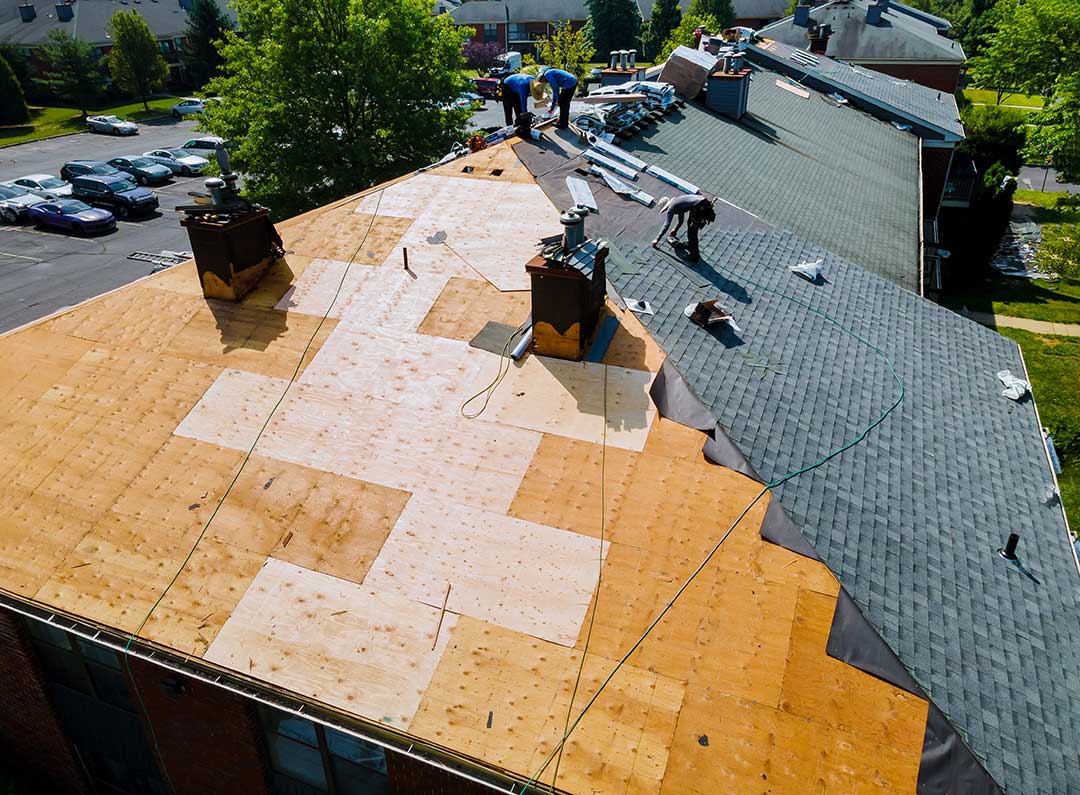
DIY repair is generally inappropriate when there is:
- Sagging in the roof deck or framing
- A large or spreading interior water stain
- Active water entering during rain
- Mold-like growth or widespread damp insulation
- Damage around chimneys, skylights, or roof-to-wall joints
- A roof puncture caused by a fallen limb
- Fire, electrical, or storm damage
- Missing sections of roofing
- Multiple leaks
- Suspected structural movement
- A need to replace underlayment or roof decking
Electrical hazards require special caution. Metal flashing, gutters, ladders, and tools can conduct electricity if they contact overhead lines. Roof work should stop if there is any possibility of contact with electrical wiring.
Is it safe to repair a roof leak from inside the attic?
An attic inspection is often safer than climbing onto the roof, but it still requires care. Use a stable walkway or ceiling joists rather than stepping between them. Drywall ceilings can fail under body weight, and insulation may hide gaps.
Look for:
- Wet or discolored wood
- Damp insulation
- Water trails along rafters or roof decking
- Daylight visible through the roof
- Rust around fasteners or metal components
- Condensation near vents or the underside of the roof
Water stains do not always identify the exact entry point. Water can travel along rafters before reaching the ceiling. A temporary container may control dripping, but cutting into a ceiling or disturbing electrical wiring can create additional hazards.
If water is near a light fixture, electrical box, or wiring, avoid touching the area and shut off power only if it can be done safely from a dry location.
What seasonal timing is safest for roof maintenance in Olean?
For routine exterior maintenance, the safest conditions are usually dry, calm periods with moderate temperatures and sufficient daylight. Spring and fall can offer workable conditions, but each season has drawbacks.
Spring may bring wet decking, muddy ground, and leftover ice. Summer can produce high roof temperatures and sudden thunderstorms. Fall often brings wet leaves, shorter daylight, and slick surfaces. Winter conditions are usually the least suitable for climbing because of ice, snow, cold-related brittleness, and limited footing.
A practical rule is to postpone nonurgent roof work whenever the surface is wet, frozen, unstable, or exposed to changing weather. Temporary measures from the ground or attic may be safer than attempting a permanent repair under poor conditions.
How should a homeowner decide whether to proceed?
Before starting, ask four questions:
- Can the task be completed without walking on the roof?
- Is the ladder location firm, level, and clear of electrical hazards?
- Is the roof surface dry, stable, and in good enough condition to support weight?
- Is the visible problem clearly understood, or could it indicate hidden damage?
If any answer is uncertain, postponing the work is usually safer than improvising. Roof maintenance is not only about fixing the visible defect; it is also about avoiding falls, worsening water damage, damaging the roofing system, or exposing a household to electrical and structural hazards.
Minor maintenance can be appropriate for a prepared homeowner under favorable conditions. Roof work involving height, unstable materials, severe weather, structural damage, or uncertain leak sources should be treated as a safety issue first and a repair task second.
