
Why should a roof be checked before vacation?
A short roof inspection before leaving can help prevent a minor issue from becoming interior water damage, especially if the home will be unattended during rain, wind, or winter weather. The goal is not to perform major repairs immediately before a trip, but to identify visible problems, reduce avoidable risks, and make sure water has a clear path away from the house.
In Olean, seasonal weather can change quickly. Summer storms may bring heavy rain and gusty winds, while spring thaws and winter freeze-thaw cycles can expose weaknesses around shingles, flashing, gutters, and roof penetrations. A few simple checks can provide useful information before the house is empty.
What should be inspected before leaving?
Start with a ground-level inspection. Walking on a roof without the right equipment can cause damage or create a fall hazard, so most vacation checks should be completed from the ground, attic, or upper windows.
Look for:
- Shingles that are missing, cracked, curled, lifted, or visibly out of place
- Dark patches or areas with unusual discoloration
- Loose metal around chimneys, vents, skylights, or roof edges
- Sagging sections along the roofline
- Exposed roofing underlayment or wood
- Granules collecting heavily near downspouts
- Branches, leaves, or other debris resting on the roof
- Water stains on exterior walls, soffits, or fascia
A roof does not need to look perfect to be serviceable, but changes from its usual condition deserve attention. A missing shingle, open seam, or loose flashing can allow water to enter during the next storm.
How can gutters and downspouts affect the roof while away?
Gutters and downspouts should be clear enough to carry rainwater away from the roof and foundation. Blocked drainage can cause water to back up beneath roof edges, overflow onto siding, or collect near the foundation.
Before leaving, check that:
- Gutter channels are not packed with leaves, pine needles, or roof granules
- Downspouts are connected securely
- Extensions or splash blocks direct water away from the foundation
- Gutters are not pulling away from the fascia
- Water stains or heavy rust are not visible along seams
- Snow and ice equipment, ladders, or stored objects are not leaning against drainage components
Even during warm-weather vacations, older leaves and spring debris can shift during a downpour and create a blockage. In colder months, drainage problems can contribute to ice formation when temperatures fall below freezing after rain or melting snow.
Should the attic be checked before a trip?
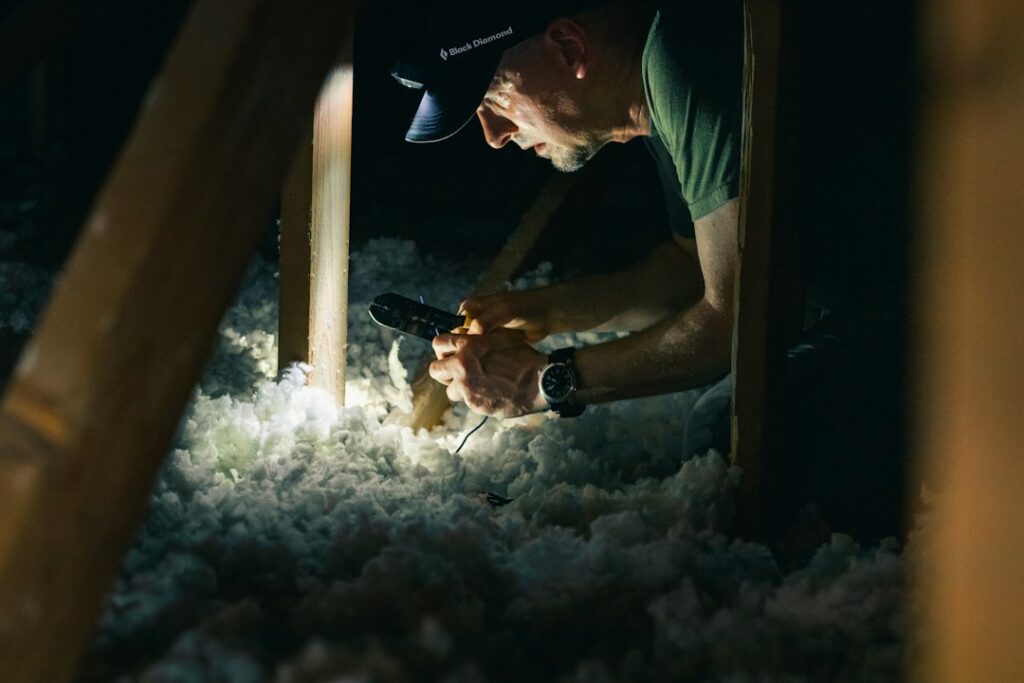
Yes. The attic can reveal roof problems that are not visible from the ground. Inspect it during daylight with a flashlight available, and look for damp insulation, water stains, mold-like spotting, rusted fasteners, or daylight showing through the roof deck where it should not.
Pay particular attention after recent rain. A dry attic does not guarantee that the roof is leak-free, because some leaks occur only during wind-driven rain or when snow and ice are present. However, fresh moisture, musty odors, or darkened wood should not be ignored before leaving the home unattended.
Roof leaks may travel along rafters or decking before appearing on a ceiling. That means the stain inside the house may not be directly below the exterior entry point.
What roof areas are most likely to cause trouble?
Roof penetrations and transitions deserve extra attention because they interrupt the continuous surface of the roofing system. Common trouble spots include:
- Chimney flashing
- Plumbing vent boots
- Bathroom and kitchen exhaust vents
- Skylight edges
- Valleys where two roof sections meet
- Roof-to-wall intersections
- Eaves, rake edges, and areas around gutters
- Older patches or previously repaired sections
Sealant is not a permanent substitute for properly installed flashing or roofing materials. A bead of caulk may temporarily cover a gap, but it can shrink, crack, or separate with temperature changes. If a defect is clearly visible before a trip, documenting it with photographs can help track whether it worsens.
What should homeowners do after a severe storm?
A roof that appears normal before vacation may be affected by wind, hail, or falling branches while the home is empty. Before departure, make a plan for how the property will be checked if severe weather is forecast.
A trusted neighbor, family member, or house sitter may be able to look for obvious signs of trouble from the ground, such as:
- Shingles or metal pieces in the yard
- Fallen branches on the roof
- Water entering through ceilings or upper walls
- Gutter sections hanging loose
- Tarps or temporary coverings that have shifted
- New wet spots in the attic

If a tree or large branch has struck the roof, entry into the affected area may be unsafe. Electrical hazards, structural damage, and unstable debris can be hidden from view. Emergency conditions involving active water entry or significant structural damage require prompt attention for safety and property protection.
How should the roof be prepared for winter travel?
Winter vacations require additional planning because snow, ice, and freezing temperatures can hide damage and restrict access. Before leaving, check that attic insulation and ventilation are not obviously compromised, because uneven roof temperatures can contribute to ice dams along the eaves.
Also consider:
- Whether gutters and downspouts are clear before freezing weather
- Whether snow removal equipment is accessible if needed
- Whether a house watcher knows how to identify ceiling stains or frozen pipes
- Whether heating will remain on at a temperature that protects plumbing
- Whether attic access can be reached safely after snowfall
- Whether heavy snow has accumulated unevenly on roof sections
Snow should not be removed from a roof casually. Walking on an icy or snow-covered roof is dangerous, and improper shoveling can damage shingles. Heavy accumulation, drifting, or visible structural sagging should be treated as a safety concern rather than a routine do-it-yourself task.
What simple maintenance can reduce risk before leaving?
Small preventive steps can reduce exposure to roof-related problems:
- Trim dead limbs that overhang the roof, where permitted and safe to do so
- Secure outdoor items that could become windborne
- Remove loose debris from roof edges and valleys without climbing onto the roof
- Confirm that attic vents are not blocked by stored belongings
- Photograph existing stains, damaged shingles, or questionable areas
- Check that interior ceiling access points are visible for a house watcher
- Keep contact information and property instructions in an accessible place
Do not paint over a ceiling stain before investigating it. Fresh paint can hide evidence of a leak and make it harder to determine whether moisture is still entering.
Is it safe to leave if a roof problem is found?
That depends on the condition. A minor cosmetic concern may not require immediate action, but active leaking, exposed roof decking, large areas of missing material, structural sagging, damaged flashing around a chimney, or a roof opening should be treated seriously before the home is left empty.
Temporary measures may limit damage in an emergency, but they should be installed safely and securely. Roof work is especially hazardous during rain, high winds, snow, and freezing temperatures. If the roof cannot be evaluated safely from the ground or attic, avoiding a risky climb is the prudent choice.
The most useful pre-vacation roof check is a calm review of drainage, visible roofing materials, attic conditions, and recent weather exposure. For households in Olean, planning around heavy rain, strong summer storms, snow, and freeze-thaw conditions can help identify problems before they become an unwelcome discovery after returning home.
